
The Socialist Equality Party (SEP) in Sri Lanka and the World Socialist Web Site (WSWS) condemn the murder of SEP supporter Sivapragasam Mariyadas on August 7 in the eastern district of Trincomalee. We call on our readers and supporters to back our campaign to demand a full investigation and the prosecution of those responsible for this crime.
All the evidence to date indicates that the killers are members of the Sri Lankan military, the police or allied paramilitary groups, and that Mariyadas’s murder is part of a vicious campaign to intimidate and terrorise the population of northeastern Sri Lanka as the government of President Mahinda Rajapakse plunges the country back into civil war. The purpose of this campaign is to silence conscious opponents of the war.
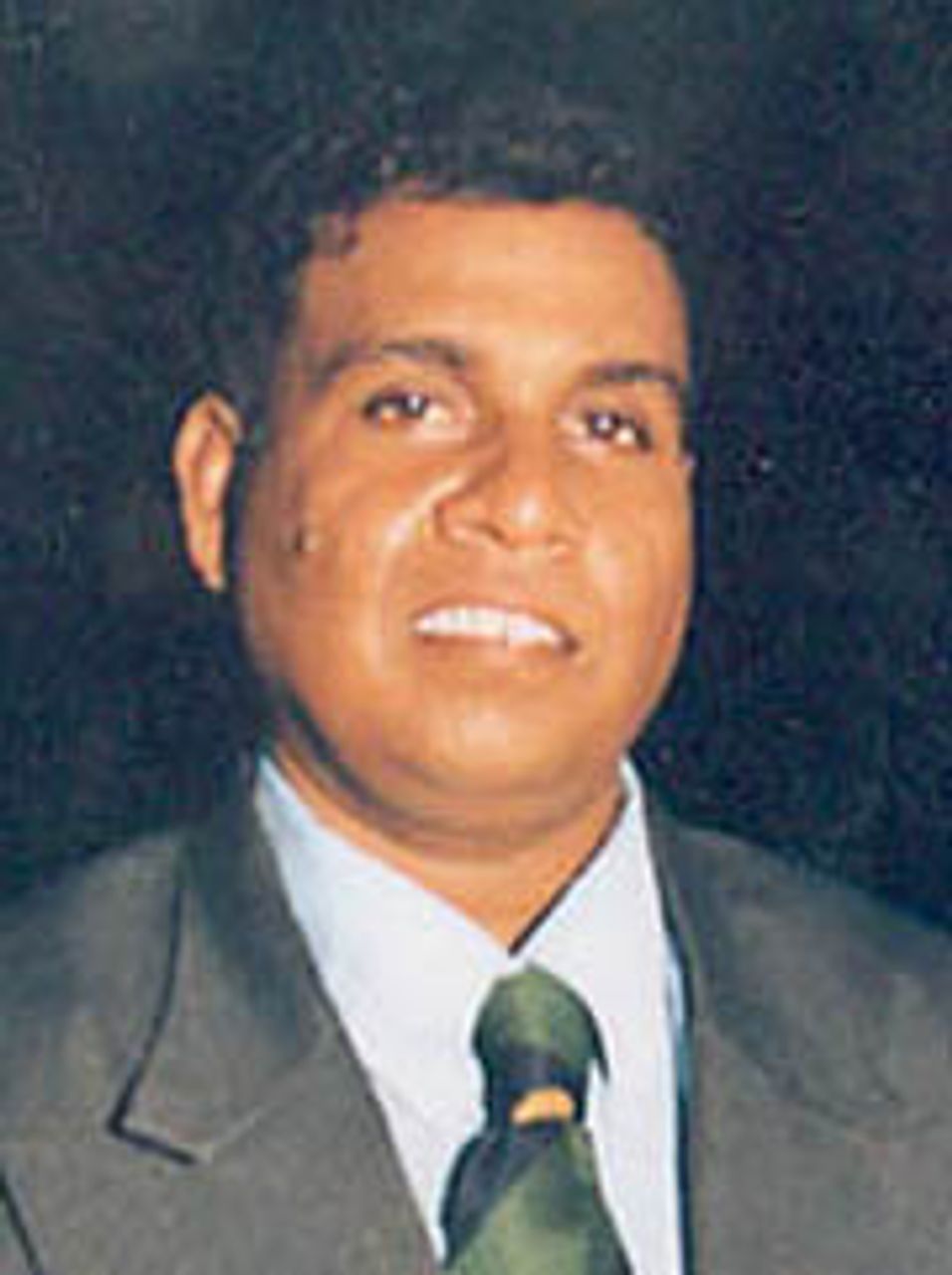 Mariyadas, 32, was a photographer by profession who ran a studio and communication centre in the rural town of Mullipothana, about 20 kilometres south of Trincomalee. He moved to the town with his wife, Stela Krishanthi Mariyadas, and three-year-old son just seven days before his death because of the difficulty of travelling daily to work.
Mariyadas returned home at 7.45 p.m. on August 7. At about 9.30 p.m., just after dinner, he went to the door after hearing someone calling out in Tamil “Mariyadas anna” or brother Mariyadas. As he reached the door, a gunman shot him in the forehead and neck, killing him on the spot.
His wife, Stela Krishanthi, rushed from the kitchen on hearing the shots and found Mariyadas collapsed on the floor. She saw the assailant in shorts, T-shirt and helmet running away from the house toward the gate. The killer jumped the wall and fled on a waiting motorbike.
Neighbours came to the house along with two home guards after hearing Krishanthi calling for help. Half an hour later officers arrived from the Thambalagamuwa police station. They wrote down a statement from Krishanthi and took Mariyadas’s body to the hospital at Kantalai, 10 kilometres to the south. The following day a magisterial inquiry was held at the hospital and a routine verdict delivered: death from gunshot injuries caused by unidentified gunmen. No serious investigation is underway.
The circumstances of the murder indicate a professional, targetted assassination by members of the security forces or paramilitary thugs. The entire area is in the midst of a war zone and heavily patrolled by troops, police and homeguards. Anyone moving at night is routinely subjected to security checks at roadblocks.
The killing took place in the immediate aftermath of fierce fighting in Muttur, some 50 kilometres to the east of Mullipothana. On July 26, President Rajapakse launched a major offensive, in open breach of the 2002 ceasefire, to seize the Mavilaru irrigation sluice gate in rebel territory. The Liberation Tigers of Tamil Eelam (LTTE) retaliated by entering the government-held town of Muttur on August 1, threatening to cut the army’s supply lines.
Tens of thousands of residents, mostly Muslims, fled after the military bombarded the town with sustained artillery and rocket barrages and finally retook control. Mariyadas’s home was a few metres from a Muslim school where refugees from Muttur were sheltering. Troops were everywhere in Mullipothana and patrolling the main Trincomalee-Kantalai road. Heavily armed soldiers were stationed at the school.
On August 5, two days before Mariyadas was killed, 17 local aid workers attached to the French-based Action Contre la Faim (ACF) were found dead in Muttur. Fifteen bodies were lined up at the ACF compound, each with a shot to the head, execution-style. Two others tried to escape and were found shot in the back. After conducting its own investigations, the Sri Lankan Monitoring Mission (SLMM), which oversees the ceasefire, formally ruled on August 30 that the military was responsible for the murders.
The Muttur killings, one of many atrocities since Rajapakse won office last November, underscore the communal character of the war. The security forces are deeply imbued with Sinhala chauvinism and treat the Tamil minority as the enemy. Sinhala extremist parties have repeatedly denounced non-government organisations operating in the North and East as “Tiger sympathisers”.
Two days later, amid this poisonous political climate, Mariyadas was murdered. At his funeral on August 9 in his hometown of Selvanayagapuram near Trincomalee, security forces patrolled the area on motorbikes and attempted to keep people away. Soldiers told Sinhalese mourners: “Why participate in the funeral of an LTTE member? You can go there but we will watch where you are going when you leave.”
Soldiers in Mullipothana spread similar lies: that Mariyadas was an LTTE member and was accorded an LTTE medal at his funeral. Despite efforts to intimidate the mourners, around 500 people—Tamil and Sinhala—attended the funeral to pay their respects. Mariyadas was a popular young man, who was well known for helping others and organising social events.
Mariyadas was not an LTTE member. While he did not openly engage in the SEP’s political activities, he agreed with the party’s political program, not the separatist perspective of the LTTE. Mariyadas had deep respect for the protracted struggle of the SEP and its forerunner, the Revolutionary Communist League (RCL), in opposing the war from the start in 1983 and fighting to unify the working class—Tamil, Sinhala and Muslim—for a Socialist Republic of Sri Lanka and Eelam.
Mariyadas came into contact with the SEP five years ago. He avidly read WSWS articles in Tamil and assisted WSWS reporters whenever he could. He and his family provided food and shelter to our journalists. If he thought their assignment was risky, he insisted on accompanying them. With his wide network of friends and acquaintances, he could always be counted on to find out information and arrange interviews. Just days before his death, he organised an interview for the WSWS with a refugee from Muttur. Mariyadas wanted a true picture of what was happening in Sri Lanka to reach an international audience.
He summed up his opposition to the war quite simply: “See, we Sinhalese, Tamils and Muslims live here with close ties and relations. A handful of people from these three sides come here and incite communal disharmony for their own advantage.” Deeply opposed to the war and hostile to all the ruling elites, he would say: “It is ordinary Tamils and innocent Sinhala civilians, as well as soldiers, who die in this war.” It is no accident he was attracted to the SEP and WSWS.
Mariyadas had no personal enemies. When his family members urged him not to shift to Mullipothana, Mariyadas told them he was not afraid because the local Sinhalese and Muslims were all friendly to him. He was killed because he was a known opponent of the war. His murder was aimed at terrorising others looking for a progressive political road out of the quagmire of communal warfare that has engulfed the island for more than two decades.
When the SEP spoke to the Thambalagamuwa police on September 4, Sergeant Perera, acting head of the crime branch, said investigators had found no clues. He said the police suspected a terrorist group such as the Karuna group, an LTTE breakaway allied to the military. Perera also implied that the LTTE might have suspected Mariyadas of passing on information to the security forces and killed him. In other words, the police are conducting no serious investigation.
Sergeant Perera told the SEP that inquiries would be continuing and the case was due to be heard again in the local magistrate’s court on December 7. The danger is that a monstrous cover-up is being organised—as has happened repeatedly when the Sri Lankan security forces are involved in such crimes.
The SEP and the WSWS are launching an international campaign to demand that the Sri Lankan government find and prosecute Mariyadas’s killers. We urge all our readers and supporters to write to the Sri Lankan authorities protesting the murder, demanding a full investigation and the arrest and charging of all those responsible.
Protest letters should be directed to:
Inspector General of Police Chandra Fernando,
Police Headquarters, Colombo 1, Sri Lanka.
Fax: 0094 11 2446174
Email: igp@police.lk
Attorney General K.C. Kamalasabeyson,
Attorney General’s Department,
Colombo 12, Sri Lanka.
Fax: 0094 11 2436 421
Copies should be sent to the Socialist Equality Party (Sri Lanka) and the World Socialist Web Site.
Socialist Equality Party,
P.O. Box 1270,
Colombo, Sri Lanka.
To send letters to the WSWS editorial board please use this online form.