
This is the sixth in a series of articles on the 2007 Sydney Film Festival, held June 8-24. Part 1 appeared on July 4, Part 2 on July 10, Part 3 on July 11, Part 4 on July 12 and Part 5 on July 24.
Turkish cinema dates back to 1914, when the first local film was made. But the first major movie—Bir millet uyaniyor, a nationalist epic directed by Muhsin Ertugrul about the formation of modern Turkey following the collapse of the Ottoman Empire in 1919—was not produced until 1932. Ertugrul, who had worked as an actor and director in Germany, dominated Turkish cinema until 1939, adapting plays, operettas and novels for local screens.
Film studios emerged in the 1940s, and in 1948 a reduction in local taxes on films provided a real boost to the industry, helping create the conditions for the first Turkish film festival. According to film historians and critics, the number of productions rapidly increased over the next three decades, although the technical and artistic quality was generally regarded as poor. In fact, the Istanbul Film Festival in 1976 decided that no local movie was considered worthy of its Best Film Award.
During the 1990s the number of locally-made movies declined—outside the major cities there were few cinemas and so most features were made for television—but the quality of the work improved. While only 20 movies were produced in 1997, that year saw the most successful and critically acclaimed local films, nationally and internationally. Since then Turkish movies have become regulars at international film festivals and frequent award winners.
This year the Sydney Film Festival screened 11 Turkish films, a positive addition to its program and one that provided a small window into this extremely diverse and socially-polarised country. The majority I viewed were serious works, grappling with questions of social inequality, poverty, religion, among others. While they were honest and at times sensitive efforts, most failed to profoundly move or leave a lasting impression.
A truck driver commits a crime
Forty-eight-year-old director Tayfun Pirselimoglu is an accomplished painter and screenwriter. His directorial debut, In Nowhere Land—about a Kurdish mother’s journey to find her son who has disappeared under suspicious circumstances—was produced in 2002.
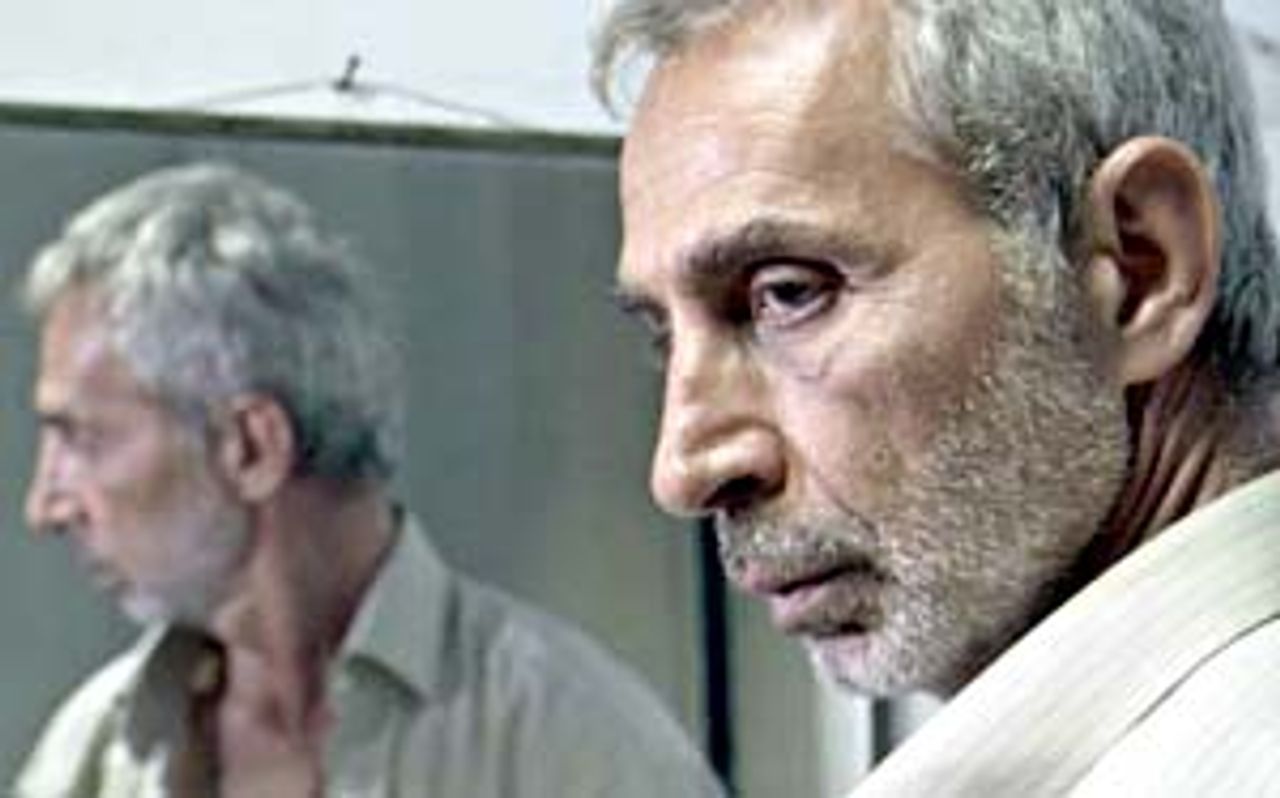 His latest film Riza is about low-paid owner driver, Riza, who is on an economic treadmill, barely keeping his head above water. His truck breaks down and he has no money to repair it. If he doesn’t work the truck will be repossessed.
What follows is a series of futile attempts by Riza to obtain the money he needs. First he steals from the pockets of a dead colleague, but the amount he takes is not enough to repair the vehicle. He plays the lottery; appeals to a former lover (Melissa Ahmedi) whom he left suddenly one morning years before; and tries stealing from a bar. He then becomes acquainted with a generous Afghan immigrant and his daughter-in-law, who are living in the same boarding house as Riza.
Desperate and frustrated, he considers stealing the Afghan’s money. After the two men return to the boarding house together one night, Riza kills the Afghan and hides the body. The dead man’s daughter-in-law, who does not speak any Turkish, is waiting to hear from her husband who is living in Italy as an illegal immigrant.
Riza flees the boarding house, but stricken by guilt returns and decides to help the young woman return to Afghanistan. The only other resident who may know about his crime leaves the morning before Riza heads off in his now repaired truck. The film ends without making clear whether Riza succeeds in helping the daughter-in-law.
Despite its serious subject matter—poverty and murder—Pirselimoglu’s movie is not particularly effective or moving. The problem is that Riza, despite a commendable performance by Riza Akin as the driver, never acquires any depth as a character. Extended close ups of Riza’s face and slow camera pans are no substitute for real character development.
Pirselimoglu provides context and motive for Riza’s crime, but his film fails to create any sense of the social inevitability of his actions, thus preventing audiences from developing any empathy for the driver’s plight.
The movie’s strongest element is its exposure of the poverty and misery suffered by the protagonists, captured well in the appalling condition of the boarding house.
Capital punishment
To Make an Example Of (Ibret Olsun Diye) is an intelligent and well-made documentary by Necati Sönmez. It humanises the victims of capital punishment in Turkey and thereby mounts a strong case against the barbaric practice.
Turkey abolished the death penalty in 2002, but from 1920 to 1984, when executions were legal, 712 people, including 15 women, were hanged.
Sönmez’s 52-minute film explores the issue by first exposing the horrendous conditions in a Turkish jail infamous for the number of hangings carried out there. The jail, which is now a museum, was below sea level and therefore dark, damp and rat-infested. According to one former prisoner, there were so many rats that they would crawl into the prisoners’ mouths as they slept.
In another sequence, a retired lawyer breaks down crying as he tells the filmmakers about one particular hanging, which took tens of minutes for the victim to die because the noose was not properly tied.
But the film’s most affecting moments are narrations of victims’ last letters to their families. Hidir Aslan, the last prisoner executed in Turkey on October 25, 1984, writes:
My dear brother, I’m not going to write a long letter. I’ve prepared myself for this day. My last journey must be as good as my life.
Grieving? No, I don’t want to be grieving, my dearests. I don’t feel like speaking wisely. Everything must be clear and simple as it was in my life.
While writing this letter I am drinking tea and smoking. Very slowly. Fully enjoying ... I am not uncheerful. I’m trying to recall the fragments of my life on paper. In a very short time, for this moment.
Once you asked me to write my will. I didn’t do it. Nevertheless we have enough time now. Take the side of goodness and truth. This is my last wish ... for all of you.
I would like to say many things. But the time is limited. I have only ten minutes left. I am embracing and kissing you all, with all my heart, and with all my honourable might. I will be with you again when those glorious days come. Your uncle, brother and friend ...
The film ends with the chilling fact that 69 countries and territories still retain, and use, the death penalty and over 20,000 people languish in death row cells around the world, awaiting execution. To Make an Example Of is an important contribution to the fight against state-sponsored murder.
Religious exploitation
A Man’s Fear of God (Takva)—Özer Kiziltan’s first feature—has won numerous awards, including the prestigious International Federation of Film Critics prize at this year’s Berlin Film Festival. Written by Onder Cakar, the film attempts to deal with the hypocrisy of institutionalised religion, in this case Islam, and how it cynically betrays the trust of its adherents.
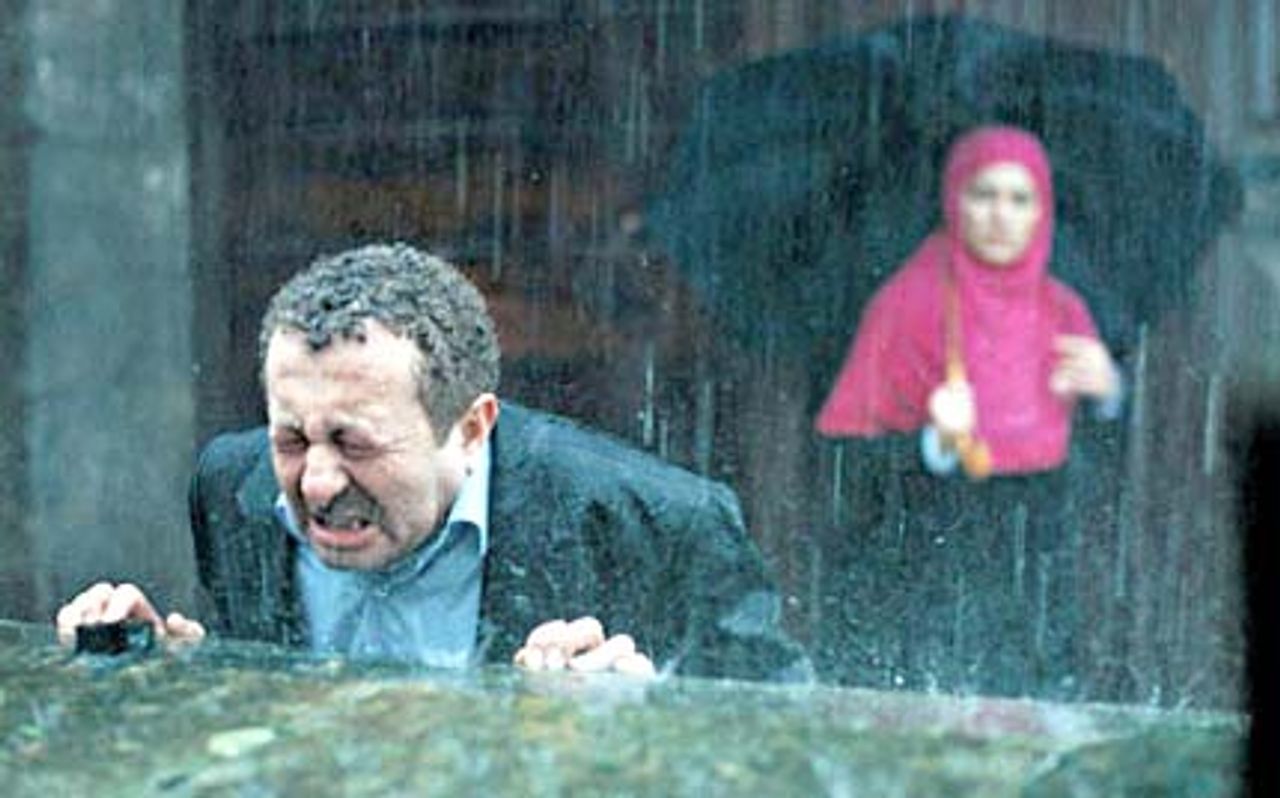
Muharrem (Erkan Can), a lonely, middle aged and deeply religious man is asked by a Sufi Islamic sheik (Meray Ulgen) to help with the sect’s financial and administrative work. This involves collecting rent and organising maintenance for the scores of apartments, shops and storage spaces that the sect owns. Muharrem is honest, kind and naïve and wants to assist; his naivety a little reminiscent of Myshkin in Dostoyevski’s The Idiot.
Some weeks later, Muharrem is invited to live at the seminary and reluctantly agrees. He is given access to a car and driver, a suit, watch, mobile phone and other material goods he has never had. These things are all “made by heathens”, Rauf (Guven Kirac), the cleric’s right-hand man, declares, but necessary for the sect’s business dealings.
What follows is the transformation of Muharrem, from a simple but devoutly religious man, into an efficient and calculating businessman—a process that deeply disturbs him and places him on the path to a mental breakdown.
Muharrem is unable to deal with the contradiction between his faith and the sect’s business operations. Distraught about collecting haram or “impure” money from a tenant who drinks alcohol, Muharrem is assured by Rauf that this client “pays his rent on time”. Muharrem is also concerned about being given preferential treatment wherever he goes, but is told by sect leaders that he is serving god and therefore his time is more important than that of others.
When the Sufi cleric discovers that Muharrem has waived the rent for a poor family whose father is dying, he says that “there have always been rich and poor people” but the organisation’s work provides for the education of new religious disciples who will help the poor.
A Man’s Fear of God is a well-intentioned film about an important subject but is weakened by some heavy-handed work.
Muharrem has recurring dream/nightmare sex scenes that are overdone and become implausible. His reaction to bribery and the sect’s coexistence with it lacks complexity. Likewise his descent into madness is far too rapid and mechanical.
Commenting on his film, director Kiziltan, who claims to be an atheist, told one journalist that he could see “no difference” between religion and atheism. Notwithstanding this confused comment, A Man’s Fear of God indicts religious hypocrisy and points to the insidious and reactionary role that organised religion plays in social life. A more nuanced approach to his subject matter, however, would have produced a more powerful film.
Failed relationship
Nuri Bilge Ceylan is an internationally acclaimed director. He made two features—The Small Town and Clouds of May in the late 1990s before winning a Grand Jury Prize at Cannes in 2003 for his film Distant. Ceylan has a visually poetic style and has been compared to imaginative filmmakers like Michelangelo Antonioni and Andrei Tarkovsky.
Climates (Iklimer), his latest movie, is about a failed relationship between Isa, an architecture teacher, and Bahar, an art director currently working on a TV series.
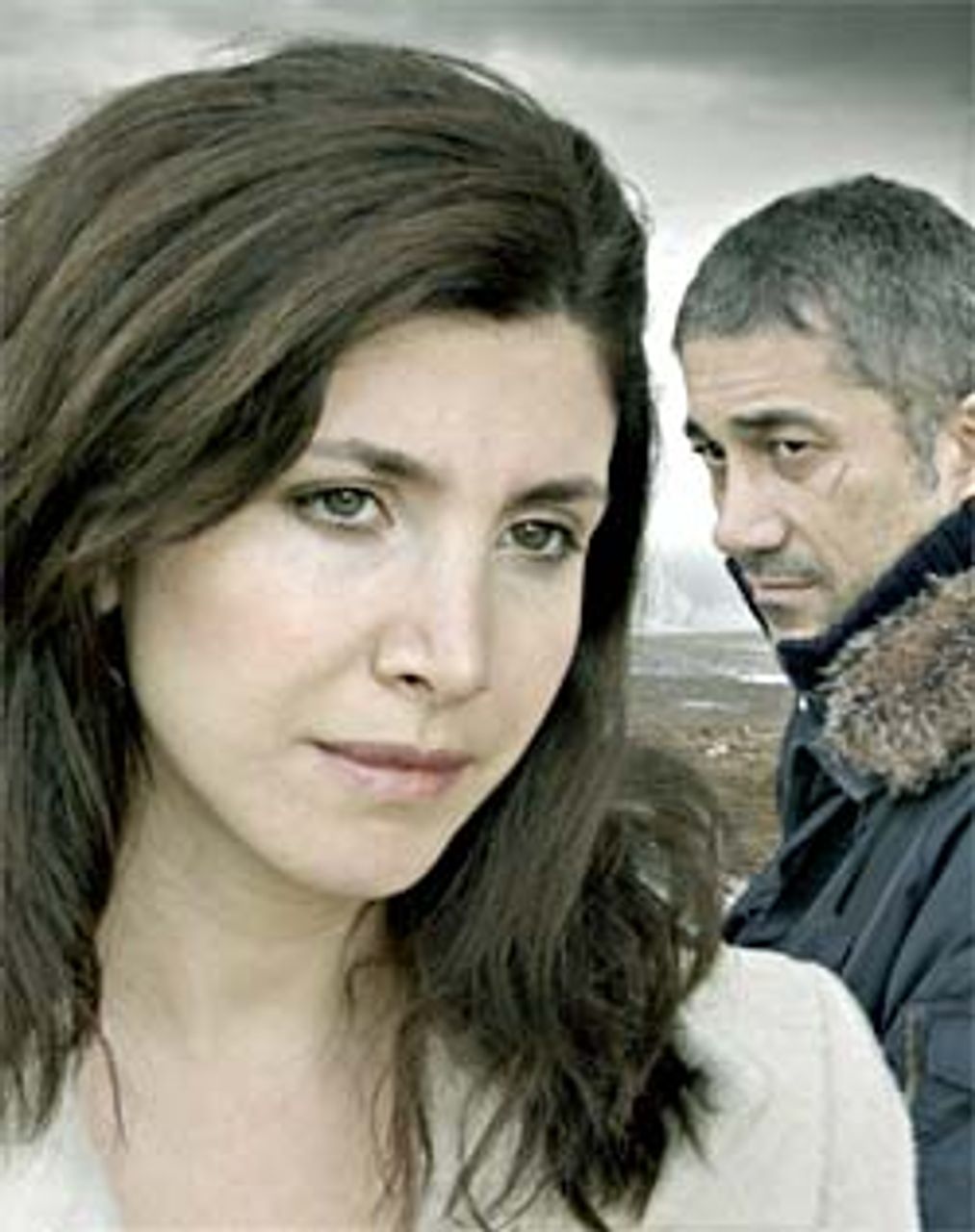 We are introduced to the couple (played by director Ceylan and his wife Ebru), holidaying on the Turkish coast. There is constant tension between them and while they are together supposedly enjoying their vacation, they are miles apart emotionally.
Bahar makes a vague reference to Isa’s former affair with Serap. Her expressions range from brooding to teary and unhappy, with an occasional forced smile at her partner. After a motorcycle accident the couple breaks up and the two return separately to Istanbul.
Isa resumes his affair with Serap (Nazan Kirilmis), a relationship that appears to be purely sexual. He discovers through Serap that Bahar is shooting her television series in a remote and cold part of Turkey, and decides to spend his vacation there.
He meets Bahar at a hotel and pleads with her to quit her job and return with him to Istanbul, claiming to be a changed man. She refuses to leave the television shoot, even though she still loves him. Isa makes arrangements to return to Istanbul but falls asleep, only to be woken by Bahar and they spend the night together.
The next morning Bahar relates a dream she had, but Isa bluntly responds that she’ll be late for the morning’s shooting. Shocked by this curt dismissal, Bahar leaves and not long after Isa is on a plane back to Istanbul.
Climates is preoccupied with visual atmospherics at the expense of any real character or plot development. While the performances of Ceylan and his wife are adequate enough, the movie fails to evoke much of an emotional response. In fact, this tepid relationship saga does not add up to much at all.
In comparison with other Turkish movies screened at the Sydney Film Festival, Climates reveals the least about social reality in modern day Turkey. For the most part it is a highly-stylised and largely empty work, where nothing of any real significance happens.